
What: A Midsummer Night’s Dream by William Shakespeare
Where: The Royal Shakespeare Theatre (RST), Stratford-Upon-Avon
Who: The Royal Shakespeare Company (RSC)
When: February – March 2024
So, when I come to assess a production of A Midsummer Night’s Dream, I am considering a play that I have acted in, directed and produced on a professional level. Whatever else this means, it means that I am coming to view a play that I have strong opinions about. I consider that I have a firm understanding of the play’s strengths.
This I think is important to establish in the critique I offer – not least because I think that Eleanor Rhodes’ direction of the play is remarkably uneven.
I quote the line about the lover, the lunatic and the poet in my title, not only because I always quote a line from the relevant play in the production I am reviewing, but also because I think you could also divide Ms. Rhodes’ direction into three elements – and the degree to which see emphasises their importance in the way that she lays out the play before her audience.
It is crucial to understand that the “lunatic” elements that she finds in the script are pushed very much to the forefront – too much. This gives the audience a merry night out, but rather allows some key poetic elements of the play to be lost in the background.
Stage directions are at a premium in Shakespeare’s plays, but during the vital dialogue between Oberon and Titania towards the close of the play, the Bard specifically orders a “song and a dance” in celebration of the marriage. This is omitted in ths current production whilst the one at the conclusion of The Mechanicals’ play-within-a-play is retained. The dance and shouts that conclude the Mechanicals’ play are perhaps more in keeping with an illegal rave than A Midsummer Night’s Dream, and consequently the significant “poetry” of the discourse between the King and Queen of the fairies is probably lost to the majority of the audience, who still don’t seem to have recovered from the preceding dance and the ridiculous elements and double entendres of Pyramus and Thisbee’s interaction with wall and the lion.
At least this is consistent. For it must be also noted that the conversation between Oberon and Titania which explains the lack of balance that is occurring in nature in the earlier part of the play is also pushed into the background, and seems to make little impact on the audience.
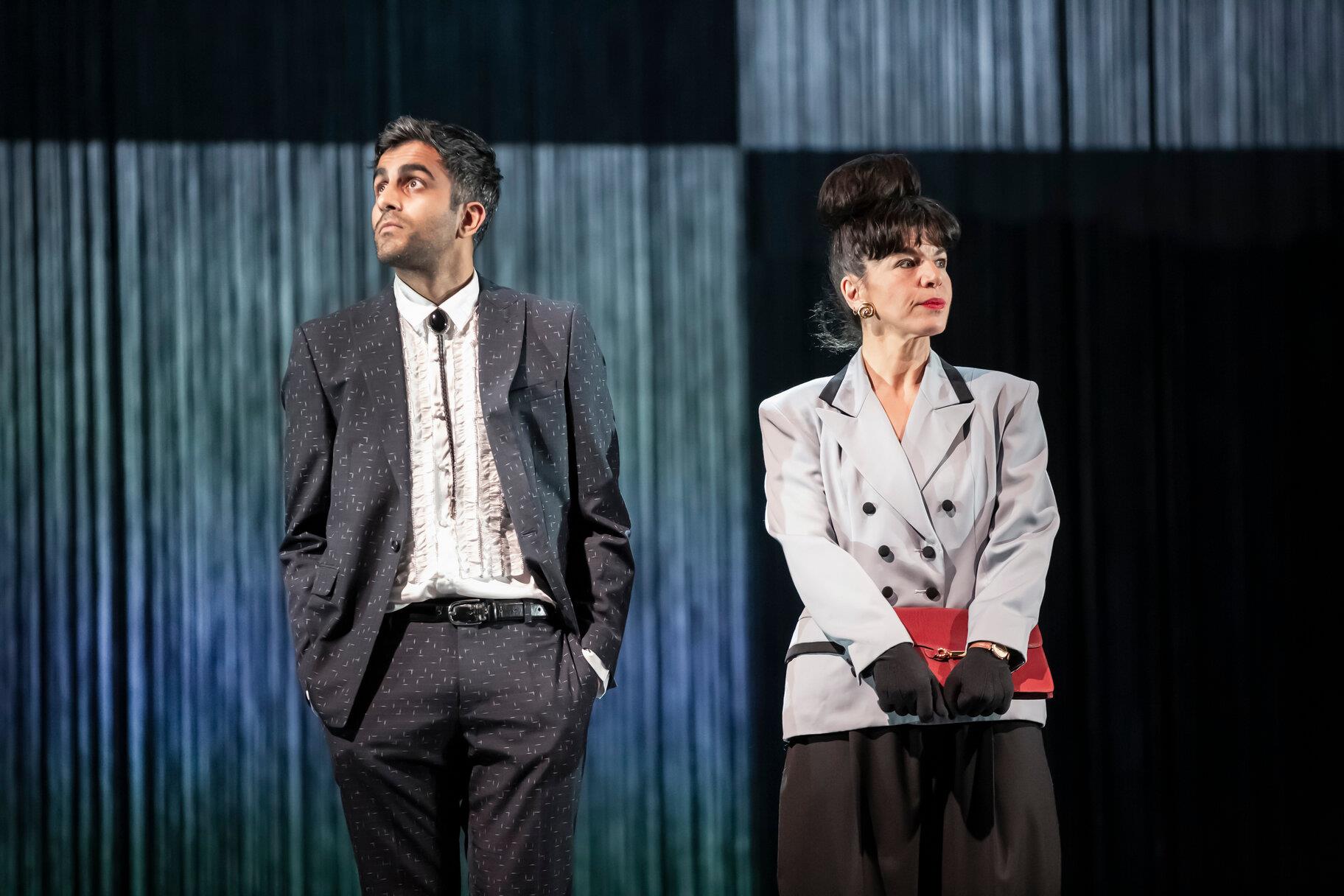
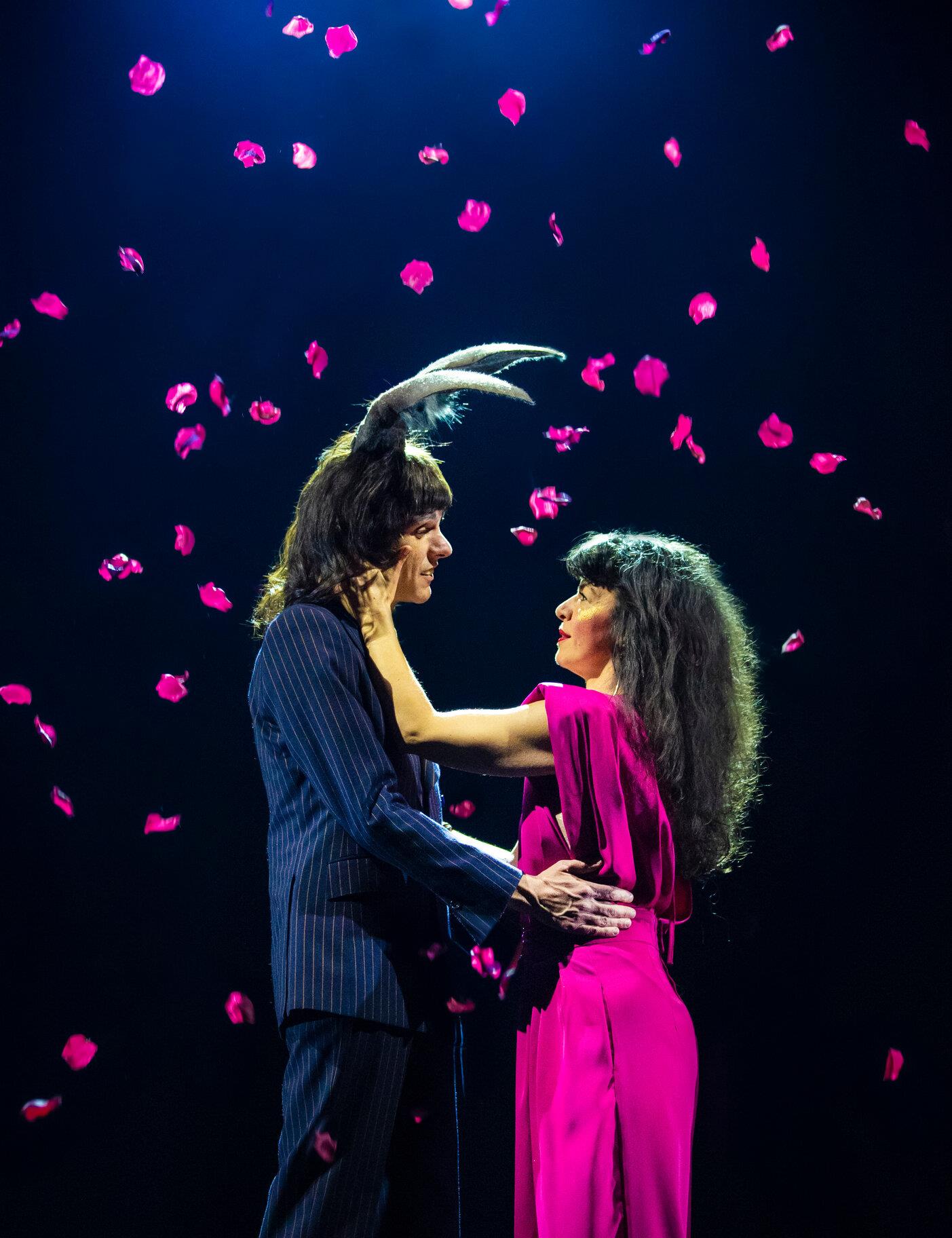
Oberon and Titania are played by the same actors who play Theseus (Bally Gill) and Hippolyta (Sirine Saba). This is a not uncommon directorial decision and a useful one. It raises the question of whose dream this is. Is it Theseus’? Is it Hippolyta’s? Is it Bottom’s dream, indeed? Or someone else’s? It adds to the mystique and the fun. Almost everyone is seen asleep at some time. The dream in the Midsummer could be in the mind of anyone… even the audience.
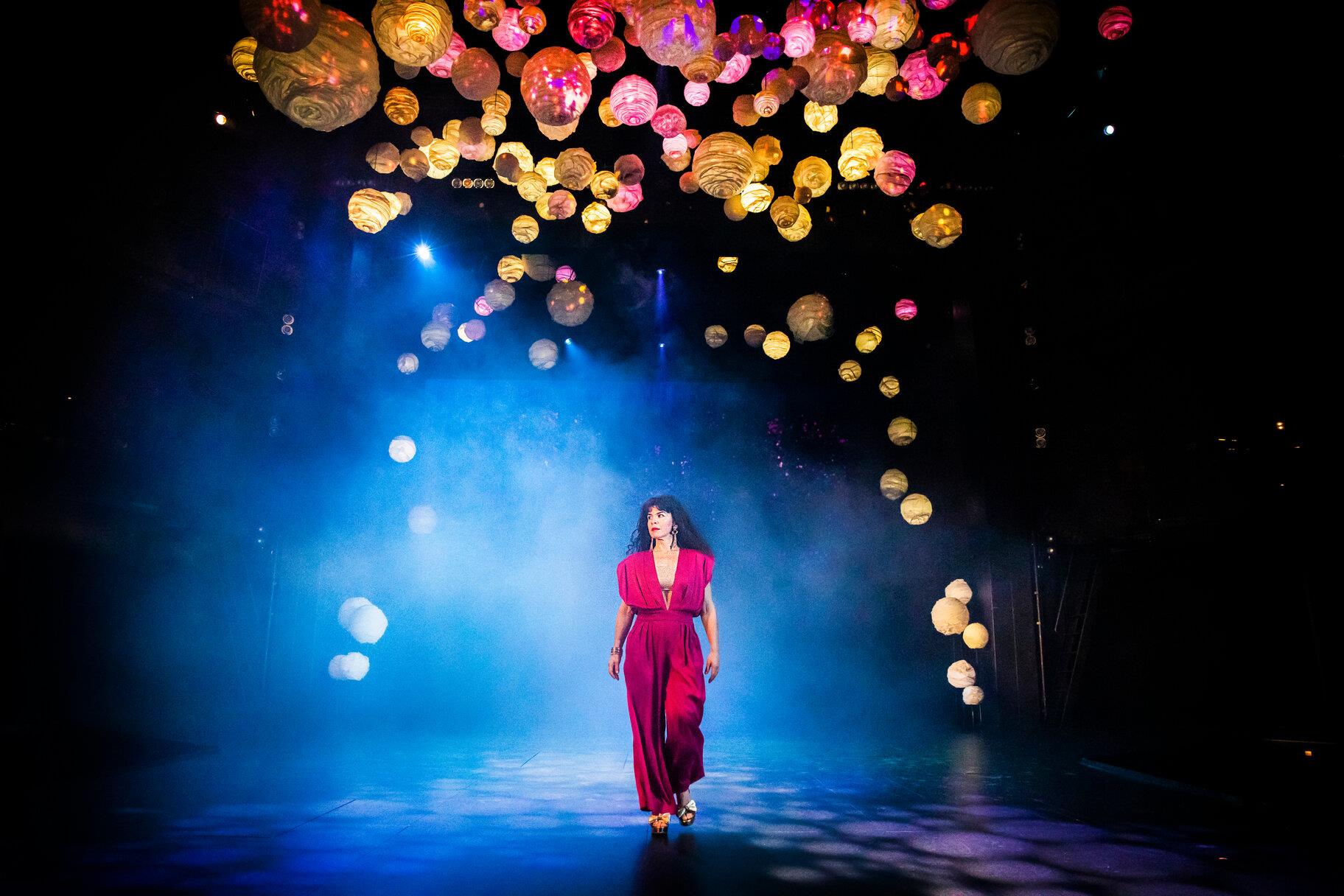
The costumes given to Theseus / Oberon and Hippolyta / Titania are less helpful devices. Theseus and Hippolyta look like they might be Tory MPs. Oberon looks like Adam Ant might have done if he had come from an Asian background. At least, Titania’s sultry and exotic costume adds to the glamour of the event.
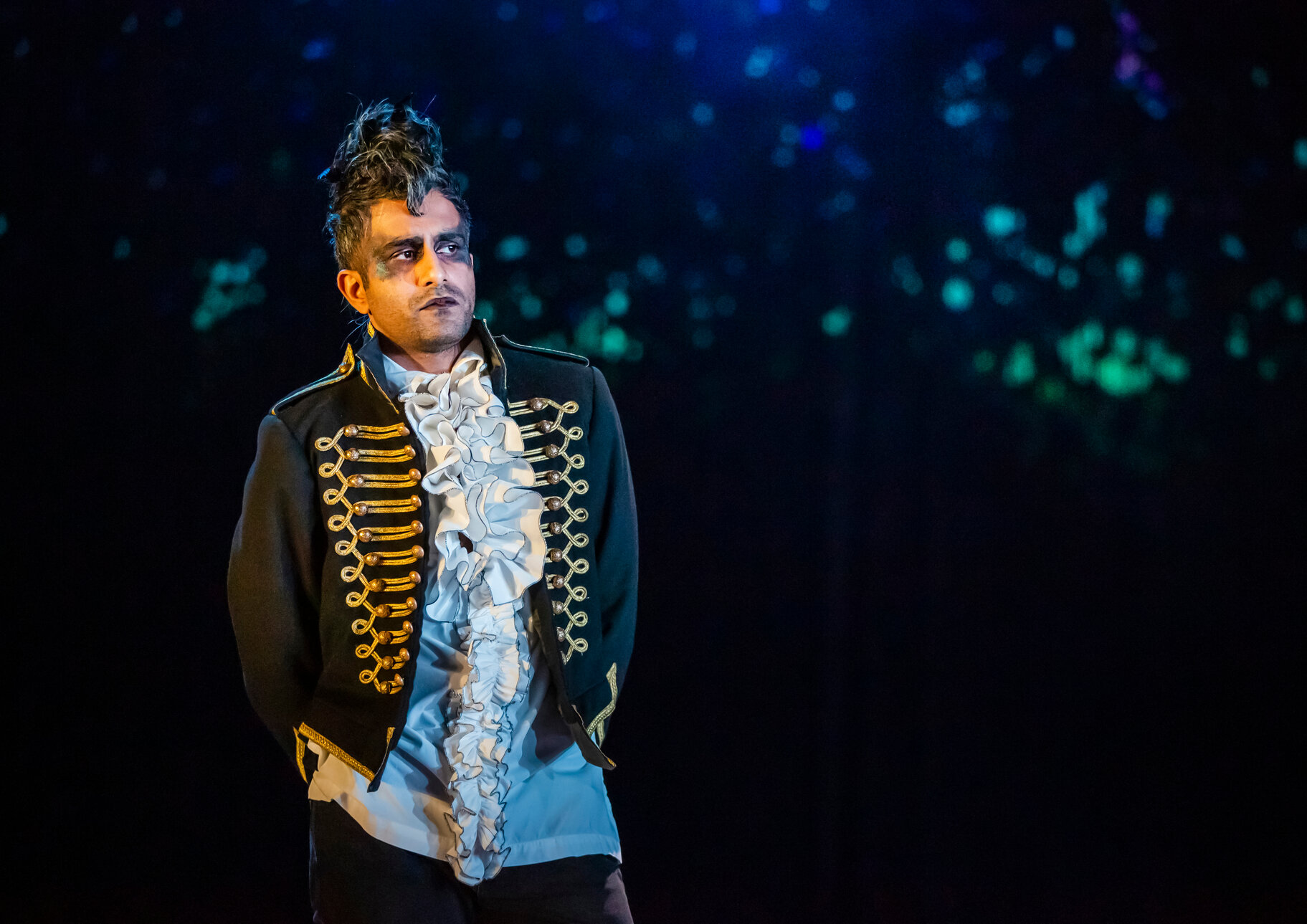
Lucy Osbourne’s stage design is overly elaborate. The lady in the seat next to me commented that the paper globes hanging from the theatre ceiling (when unlit) looked like something that might have been in her parents’ living room in the 1960s. She wasn’t far wrong.
Most disappointing was that the actors’ representing the group of fairies who serve Titania were represented only by beams and spots of light, and were only seen / heard by voices emanating from the darkness. If I had a role with the RSC and then found out I was going to be represented by a blue spot, I think I would be disapponted. Not surprising that the script requires Bottom as the ass to be seeking out Mustardseed, Cobweb, Moth and Peaseblossom. They are invisible to the naked eye, whilst Titania and Oberon are easily seen. Perhaps they are much bigger fairies – in line with their seniority.
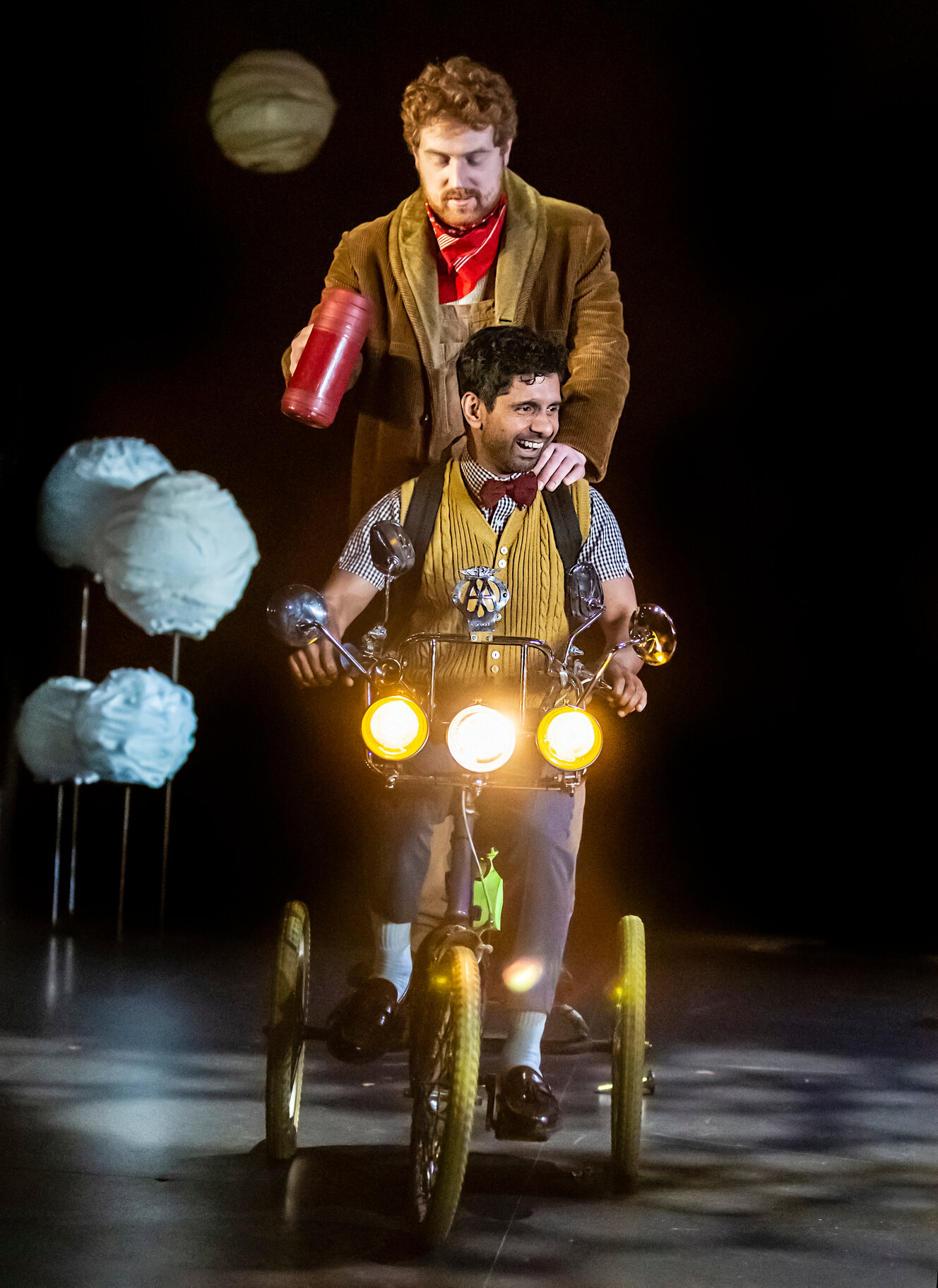
When the play broke for the interval, I was ready to give a positive report. Okay, the opening scene had gabbled lines and things didn’t start well, but Puck was a treat and Oberon and Titania were more involved than Theseus and Hippolyta (peculiarly). The 4 “lovers” were excellent at times. The Mechanicals (especially Bottom) were great.
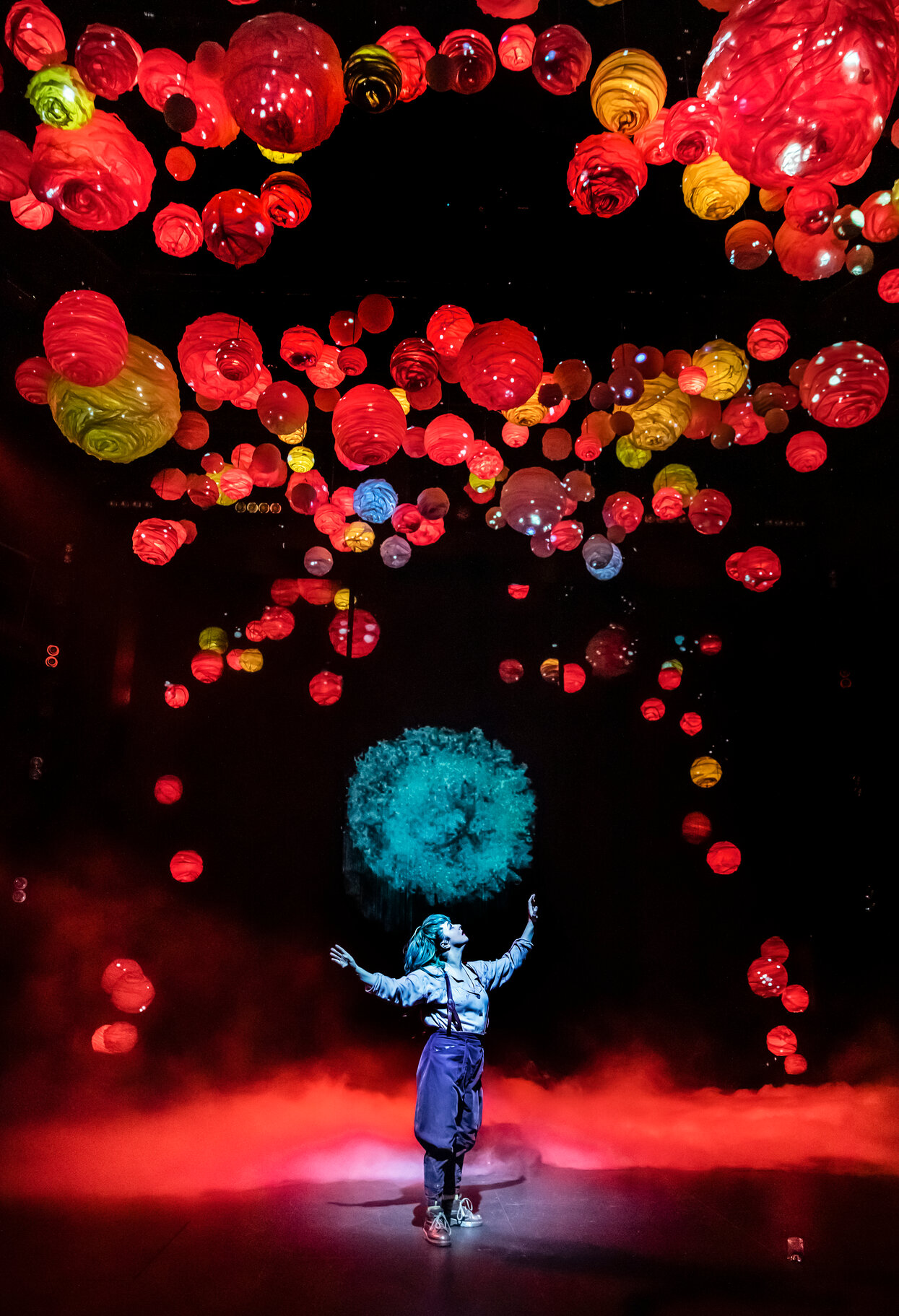
However, in the second half everything really fell apart. The Mechanicals were too manic to be believably foolish. Things became a little deranged and frayed around the edges.
Throughout, Bottom (Matthew Baynton) and especially Puck (Rosie Sheehy) remained head and shoulders above it all.

There are some things to commend here, but it is all so untidy.
Shakespeare purists should go at their own risk.
 twilightdawning