God Rest You, Merry Gentlemen

Place: St Brides Church, Fleet Street, London

Time: Yesterday Evening

Event: The "Jethro Tull Christmas Carol Service"

What? Those rockers who so ably debunked organised religion on their album, "Aqualung", in a Christian church and involved and leading an event full of Christmas Carols, prayers and Bible readings.

Surprising, indeed.

But this was an event aimed at raising money and support for London’s homeless and this proved an easy alliance. Aqualung, a wheezy old tramp of the old school, didn’t make an appearance but there was a portion of "Thick as a Brick". In short, Tull took care of seasonal entertainment whilst the clergy and church members added the spiritual decoration. And a fine night was had by all.

Highlights of the night? Gentle wintry folk, from Tull, including "Weathercock" from Heavy Horses, and "Jack-in-the-Green". They also turned their hand to jazzy renditions of traditional Christmas music – albeit in instrumental form – with "God Rest Ye, Merry, Gentlemen" and "We Five (Three) Kings of Orient Are". They even came over all Steeleye Span with their own re-working of "Gaudete", led by Ian Anderson and the church’s choir, with the congregation doing their best on the chorus.

Journalist, Gavin Esler and actor, Andrew Lincoln helped Ian and the men in dog-collars out with the scripture and poetry readings.

Apparently, the whole thing will be mixed down for a limited cd release.

A cool yule indeed!

Ian Anderson of Jethro Tull gets into the Christmas Spirit  

The Play’s the Thing…….

DSC01426


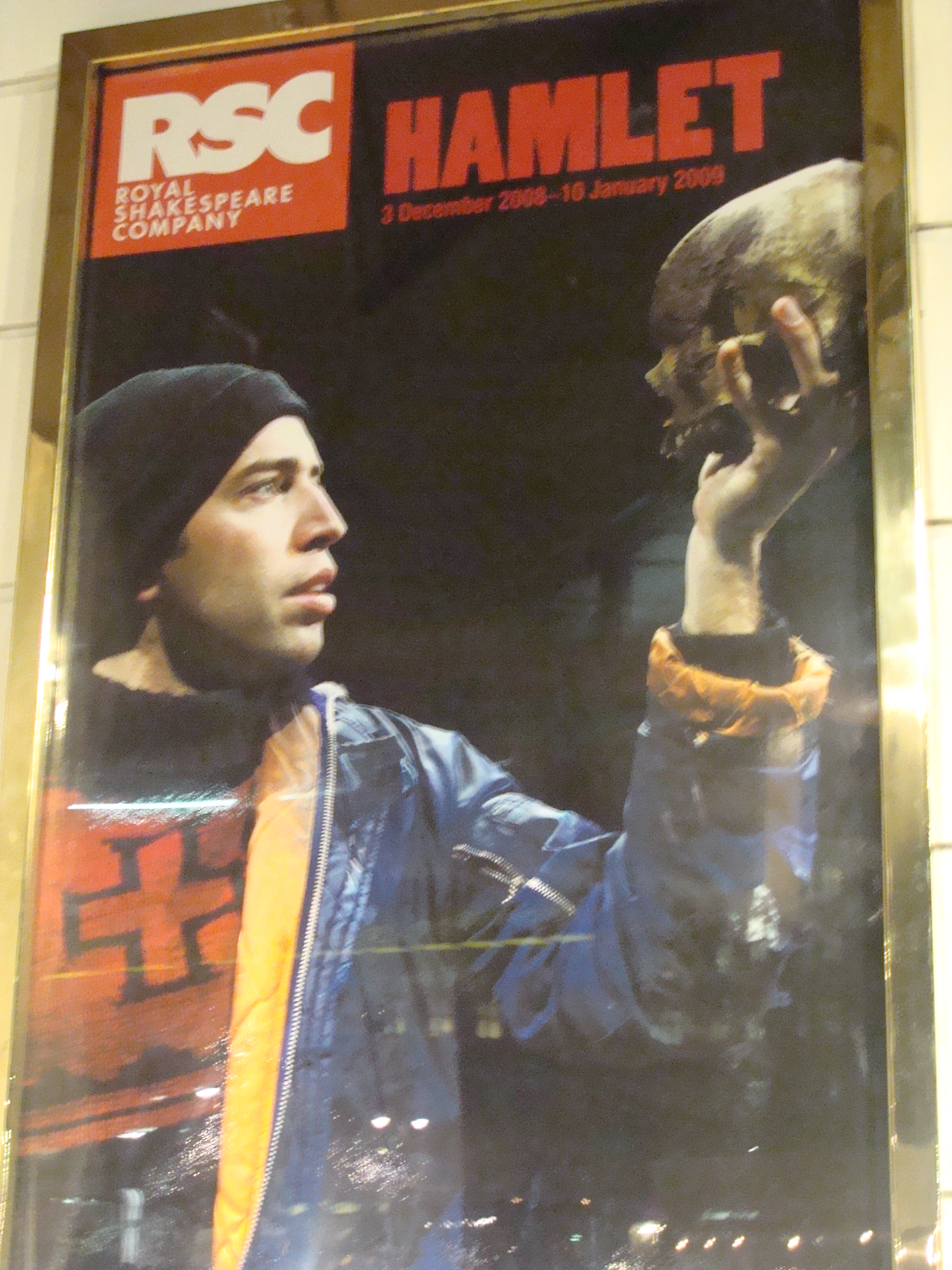
Edward Bennett as Hamlet

In Hamlet, the RSC have, by far, their best production of the year. Last night at the Novello Theatre, an enthusiastic audience rose to their feet in standing ovation to reward the actors on the conclusion of an oustanding performance.

Continue reading

Wherefore art thou, Romeo?

On Friday, I was in Stratford-Upon-Avon, once more, for the Royal Shakespeare company’s latest production of Romeo and Juliet. It has been an interesting year for the RSC with receipts up because of David Tennant’s involvement in Hamlet and Love’s Labour’s lost but some mixed reviews and varying quality and conceptualisation of productions.

Continue reading

Ballad of the Sad Cafe

No, not the Carson McCullers book, but an English band of the 70s and 80s, who for my money were probably the best live band on the circuit for a period of about five years around that time. I met up with their bassist, Des Tong, again, a few nights ago. I’ll tell you their story.

Sad Cafe rose from the ashes of some long forgotten Manchester-based bands like Gyro and some of their members had served time with progressive rockers Mandalaband. They began to tour in late ’76 and were quickly signed to RCA. Their debut album, Fanx Tara came out on the 1st of September 1977. Their line-up at the time consisted of:

Paul Young (Vocalist and percussion) (most decidedly not the "Wherever I lay My Hat" guy but the one who went on to front Mike & the Mechanics)
Ian Wilson (guitars and backing vocals)
Ashley Mulford (lead guitar)
Vic Emerson (keyboards)
John Stimpson (bass)
Tony Cresswell (drums)

Young had been with the Toggery Five in the Sixties and led a band called "Young & Renshaw" as well as cutting some solo singles in the first part of the Seventies. He had swagger and panache that was natural but was coupled with moves he had swiped from Jagger, and an incredible set of pipes gave him some of the best vocals I’ve ever heard. Mulford was developing into a very under-rated but accomplished lead guitar whilst Wilson had a sweet voice and played six and twelve string acoustic as well rhythm electric with ease and style.

The first album included Black Rose, Hungry Eyes and I Believe (Love Will Survive) which were to be staples of their live show for the rest of their time together. However sales were modest although the album made it to no. 56 in the UK chart.

Second album, Misplaced Ideals, trod a similar path in musical style and sales (peaking at no. 50 on the charts) but the big breakthrough seemed far away. Their reputation as a great live band had begun to spread and one of their performances was filmed for a broadcast entitled "An Evening with Sad Cafe" which mooched around the late night TV schedules for the next few years and was eventually commercially released after Gary Numan and Blondie had made that a viable option.

The album, released in April ’78, contained Restless and On with The Show which also became live favourites. In early ’79, a lesser cut "Run Home Girl" suddenly became a success in the U.S. Billboard charts rising to 71 on the Hot 100 – dragging its mother album on to the top 100 U.S. albums too. The band were surprised to have broken in the States but more significantly it raised their profile in the UK where they were given a prominent slot on the Old Grey Whistle Test and all was set for a big year in ’79. A saxophonist simply known as Lenni became a regular fixture in the live band and by 1980 was a fully-fledged member.

Drummer Cresswell called it a day just as they were about to begin work on their third album and was replaced by the (in my opinion) more accomplished Dave Irving. Eric Stewart of 10cc was drafted into produce and the third album "Facades" was the one to break them big, albeit for a short time. The big hit from the album, Everyday Hurts (which reached number three in the UK charts in September 1979) was both a blessing and a curse. It meant that when ever the band’s sales dipped (which was often) the record company would request another piano ballad. The band became more associated with that song than the swaggering rockers which were their forte.

The album peaked at number 8 in the UK staying on the chart for nearly half a year. The songs were less fusion-orientated and had more catchy riffs of the kind that Eric Stewart’s band had made their mark with. 3 more hits came from the record. Strange Little Girl reached 32; My Oh My peaked at 14; and Nothing Left Toulouse stuttered as far as 62. None of these troubled the singles charts in the U.S. and the album stalled at 146 on the Billboard list.

For their self-titled fourth album, Stewart again filled the producer’s chair but either the band accorded him less space or he was more complacent in his approach. This album was a little more workmanlike. It gave them two UK hits La-di-da (no.41) and I’m in Love Again (no.40) but they were already beginning to fade from the memories of the pop scene whilst the rock crowd continued to lap up their tours. La-Di-Da became their second minor U.S. hit reaching no. 78. The album peaked at 40 and 160 respectively, in the UK and US charts. Attempts to break the band in the Netherlands and West Germany didn’t bear much fruit and the record company began to lose patience.

To add to the problems, this incarnation of the band began the process of breaking apart. Ashley Mulford was spending increasing amounts of time outside the country as a romantic liasion began to deepen. John Stimpson simply didn’t want to be in the band anymore and set out for a career in music management. Des Tong became the new resident bassist and the band began to fret about the situation with its lead guitarist.

The band owed RCA one more album and a live set "Sad Cafe Live in Concert" was released in the Spring of 1981. This was coupled with an appearance on the ITV series Rockstage which emphasised what a potent force they were. Recorded whilst Stimpson was still on bass, the album was a virtual greatest hits allowing the Johnny-Come-Latelys to hear the great songs form the first two albums in their natural environment. It outsold the last studio record in the UK and reached 36 on the album charts. A single led by the live recording of Black Rose failed to make an impact.

In a decision which was to impact the rest of their career, the band ended into a complicated arrangement which saw Polydor become responsible for their future UK releases even though they had already signed a deal with Swansong in the U.S. (who had handled the release of the self-titled album Stateside). Complicated contracts are often a bad idea and this one was to surround the band with litigation for the next 4 years as the labels squabbled about who owned albums by them.

In the Autumn of 81, they released Ole, which was only a minor success in the UK (no. 72) and was ignored in the rest of the world. The singles were Misunderstanding and Follow You Anywhere. The latter got more airplay than the former but nothing sold. Mulford was missing from most of the recording with a number of guest guitarists filling the holes. One of these, Mike Hehir, would become a full member by the time of another hugely successful tour. Great live band who couldn’t sell records was shortly to become great live band who couldn’t release records. The courts decided the band should release no more albums until the ownership of their work was clarified.

Earning their living by touring, they were on the road almost all of 1982. 1983 eventually saw a single release (albums were a no-no) as Charisma released "Keep Us Together" which reached no. 76 in the bubbling under section of the Record Mirror. A young journalist by the name of Darren Hirst was commissioned by Sounds to go and talk to the band for a feature but nothing helped restore the missing sales. By the following year, the baton for single releases passed to Virgin who released "Why Do You Love Me Like You Do". More touring and spots at Reading and Glastonbury Festivals had enhanced their live reputation even further but their sales increased not a jot. The band played some farewell gigs, persuaded RCA to release a "Best of" package and called it a day.

Paul Young, by now, had another problem to deal with. A singer had risen to prominence using the same name – something that couldn’t happen in the acting world because of Equity was entirely permissible in the music world even though Sad Cafe’s Young had recorded solo singles using that name more than a decade before. He recorded a single with Ian Devaney and christened himself Devaney Young. He made another disc as YPY (which he said stood for young Paul Young). Neither sold and he needed the income when he was invited to cut some lead vocals for Mike Rutherford of Genesis’ new side-project. They eventually released an album called Mike & the Mechanics which sold well – particularly in the States – and Young and Paul Carrack were invited to share vocals in the band for the long haul but that’s another story.

Ironically, at the same time, the legal wrangle regarding Sad Cafe’s ability to release albums was settled and Young decided that he should reform the band. Of the four remaining long standing members two declined. Vic Emerson and Dave Irving had had enough for now. Young and Ian Wilson decided to press on regardless and invited Tong and Lenni to record too. Augmented by some sidemen and a new drummer, Jeff Seopardi, the band recorded "Politics of Existing" which gathered in the singles from 83 and 84 and an album’s worth of new material. It was released in late 1985 but made little impact. Two singles – Refugees (written by new man, Seopardi) amd Only Love, were equally unsuccessful. In the States, "Why Do You Love Me Like You Do" was retitled "Heart" and gained some notice as a single.

Working hard was deemed to be a solution to the lack of sales and Ashley Mulford rejoined the lineup for a 1986 tour of the UK. Ex-Grand Prix keyboardist, Phil Lanzon who was currently a member of the Sweet, moonlighted on keyboards. However, the tour wasn’t as commercially successful as their previous outings and the renewed energy was short-lived.

The band was to have one last stab with 1989’s album "Whatever it Takes" and its single "Take Me (Heart and Soul). Whilst once again an album which displayed excellent songwriting and musicianship, it was if anything even more overlooked than its predecessor. For this set, Young, Wilson, Tong and Lenni were augmented by sidemen Steve Pigott (keyboards) and Paul Burgess (drums). Ashley Mulford disappeared as quickly as he’d returned and was once more replaced by Mike Hehir. Vocalist Alistair Gordon who would be helped by Young in his band "Radio Silence" became the band’s first full-time backing vocalist. This band played a couple of home town gigs to promote the record before drifting apart.

That really is the end of the band’s story. Where are they now? After continued success with Mike and the Mechanics, Paul Young died suddenly of a heart attack in July 2000. Ian Wilson and Mike Hehir are now part of Les Holroyd’s latest version of Barclay James Harvest. Des Tong is part of Alvin Stardust’s touring band and was my inspiration for this article. Ashley Mulford plays the blues in Germany. Vic Emerson did some work with 10cc but I lost track of him after that. Dave Irving runs the band’s official website at www.sadcafe.co.uk to which I have contributed as I can. Alistair Gordon produces a number of bands and singers now that his own band, the rather excellent "Radio Silence" seems to have folded. The bands two most commercially successful albums "Facades" and "Misplaced Ideals" have been re-released in the States by Renaissance Records (who I am currently badgering about the rest of the band’s back catalogue). It won’t be as good as seeing them live but as that is no longer possible, you should do yourself a favour and buy them.

Stardust memories

Those with a taste for the history of Rock ‘n’ roll could do much worse than catch the show that I saw last night when it comes to their town. I don’t often do nights out in mainstream theatres on the outskirts of London but I’m very glad that I made the journey last night. Let me explain.

It begins with what will be a difficult proposition for some. Alvin Stardust is a very under-rated talent.

For those who don’t know, the man who was born Bernard William Jewry first made his breakthrough in the early sixties dressed in gold lame and fronting a band called the Fentones. He had become Shane Fenton, signed to Parlophone records and recorded a single called "I’m A Moody Guy" (a title which would be singularly appropriate for the persona he adopted a decade later). In the period 1961-1964, his singles continued to chart, albeit with decreasing returns. Consequently, he never made an album at the time and ended up on the cabaret circuit a few years later.

In 1974, a promising songwriter, Peter Shelley, came up with a song called "My Coo Ca Choo" which his label, Magnet, felt was a surefire hit but they didn’t thing Shelley could carry an image which would help the song maximise his potential. Shane Fenton was considered as the vocalist and the record company came up with idea of relaunching the rock ‘n’ roller with a new image and new name. In 1973, Fenton became Alvin Stardust and the budget was spent on black leather in which he was clad from head-to-foot for his first Top of the Pops appearances. Stardust became one of the key figures in the late-period of Glam rock; his black leather providing an ideal juxtaposition to the usual glitter and make-up.

"My Coo Ca Choo" stayed in the charts for six months, peaking at no. 2. Stardust had some better songs up his sleeve – but his first hit became his best remembered and because of its longevity, his highest seller. It was followed by "Jealous Mind" which reached no. 1 but stuck around for a shorter time and then "Red Dress", "You, You, You", "Tell Me Why" and "Good Love Can Never Die" which all reached the top 20.
As glam gave way to new wave and punk, Alvin’s singles and album didn’t sell so well. His first three albums all spent good time on the charts but he has not seen an album on that list since. His singles over the next four years were mainly covers but delving into rock n roll’s vaunted history with Cliff Richard’s "Move It" and Johnny Kidd’s "Shakin’ All Over" could not get him back into the top twenty. One final stab with a tense version of Bruce Springsteen’s "Growin’ Up" also failed and Magnet didn’t renew his contract.
He did a couple of seasons on ITV’s remake of the old rock ‘n’ roll show "Oh Boy" and working alongside the young Shakin’ Stevens and the older Joe Brown and Lulu kept him in the public eye.

New wave was in full swing by 1981 when one of its most iconic labels "Stiff" announced a new signing. Alvin Stardust. Stardust debuted on the label with another cover from the earlier days of rock ‘n’ roll and giving it a pop rockabilly lilt, he took "Pretend" into the top 10. He followed this with a version of Pat Boone’s "A Wonderful Time Up There" which did well on the continent but less well here in the UK, despite an appearance on the Morecambe and Wise show and the same guitar sound which had powered "Pretend". The lit fuse really didn’t ignite fireworks and Stardust was swept aside by the lesser talent of Mr. Stevens who would continue to work a similar formula for the next 6 years.

Alvin had a quiet time until 1985 when moving from Stiff to Chrysalis, he hit no. 7 with a Mike Batt composition "I Feel Like Buddy Holly" which played to Stardust’s rock ‘n’ roll roots but sounded more like a latter day Cliff Richard. This sound continued to dominate with a big hit on the maudlin "I Won’t Run Away" and a less than successful run as the host of BBC’s "Rock Gospel Show".

I’m one of those people who is interested in musicians of many different stripes and their careers and I have the blessing and the curse of an encyclopaedic knowledge on the subject. I’d been aware of Alvin Stardust from my youngest years so when his management invited me to interview him in the 1990s, I jumped at the chance. The interview came to naught but I was impressed with him as a person and I’ve kept up with his career since.

I’m always surprised (or maybe not) when he is disparaged in the press or on TV. As a performer, he is peculiarly aware of his strengths and despite one or two wrong turns in his career, he remains an engaging talent and probably the vocalist of his generation and genre whose chops remain the strongest.
His latest tour plays to those strengths – spelling out the history of rock ‘n’ roll, and his interest in it, through versions of his favourite songs from the era before the interval and revisiting his own place in its annals in the second half of the show. Big Mama Thornton, Elvis Presley, Eddie Cochran, Buddy Holly, Carl Perkins, Gene Vincent, Bill Haley, – even Shane Fenton- their best known songs are all there. And the performer of the songs met most of them and played with some of them – quite a pedigree.

Weaknesses in the show? None that I can think of. The poster says a celebration of 50 years of rock ‘n’ roll and the show delivers exactly that. Inevitably, and quite rightly, Alvin’s hits are middle and centre – this is no tribute show – but it is the way that he understands and accurately places those songs in the flow of the music from the 50s and 60s which is so impressive.

His band is tight and inventive. He has Des Tong from Sad Cafe on bass and his long time guitarist Glyn Davies to handle the lead solos while Alvin himself handles the acoustic rhythms.

Choice of venue? A little too middle of the road for my tastes (The Beck Theatre, Hayes, for the record) with a slightly out-dated ban on cameras which means no pics from the show in this report.

After the show, I was able to catch up with Alvin (likeable as ever) and Des Tong. Sad Cafe were one of the very best live bands of their era and I could have traded stories with Mr Tong for a long time. Grateful thanks to him for chatting and answering my questions.

For me, as good as I’d expected perhaps better. For you, a surprisingly good night out if you can get past those preconceptions.

Light and… Tragic

Occasionally, there’s going to be a disappointing concert that comes along and I’m afraid that tonight might be one of those.
Ladytron at Oxford Academy was probably the worst show I’ve seen this year.

The downside:

1. Poor sound with the vocals way too low in the mix. Ladytron’s strengths would seem, on their studio recordings, to be their analogue synths and their clear and crisp vocals. All of this was lost tonight. Even the introductions between songs were inaudible down the front.

2. Dreadful lighting. I could see the people in the audience more clearly than I could see anyone on the stage.

3. Lack of stage presence – leaving the band without a focus especially in the muggy light. Geeky dancing and little natural charisma.

The upside:

1. Some of the songs from "Velocifero", particularly the three they opened the set with (Black Cat, Runaway and Ghost), showed more potential than on disc where they sound a little flat.

Not a great night.

Soon, the horse will take us to Durango

Today, I woke up in a hotel in Leeds. Back in the day, I used to come to comic fairs here. Buying up back issues of Batman and the Flash. Then it was called the Griffin Hotel. Now it is called the Discovery. Last night, I lay in my bed reading a back number of the Justice League of America fron the 1960s. Nothing much has changed. I’m in town for the John Foxx performance of the Quiet Man which happened last night at the Leeds Town Hall. Ate at Wagamamas and then went on to the show.
So what is the Quiet Man? In 1978, when he was lead singer in a band called Ultravox!, John wrote a song called "The Quiet Men" around the concept of shadowy individuals in grey suits who drift through cities unseen and unnoticed – the ordinary man on the street , if you like. He then began work on a book of short pieces of prose about the Quiet Man which he has been working on to this day and which remains unpublished. Last night was the debut performance of a film designed and developed around the concept of some of these short "stories" which John accompanied on acoustic piano (albeit accompanied by synthesised strings) whilst a pre-recording of a reading of one of the prose pieces was played. It was a privilege to be there.
In total, three pieces were performed and portrayed. The first was simply acoustic piano, film and pre-recorded reading and I found it the best of the three. The Quiet Man is seemly alone in a broken down culture, exploring and re-ordering its pieces as nature takes back the land. Fascinating.
The second had Foxx on Synth, whilst John ‘Karborn’ Leigh remixed and overlaid video clips live from the stage as the reading progressed.
The third was read ‘live’ by Foxx from the stage as the video played in a linear fashion.
The performance lasted under an hour but seemed much longer. Rich, fruitful, thoughtful.
Questions and answers followed and I took a full part.
I’ll try to post some pictures later.

Tired of being alone……

There is a time when a man’s heart yearns for a little Soul and R’n’B (old meaning of the term). So last night, it was off to the Royal Albert Hall of all places – the least likely Soul venue in the whole world – for an Al Green concert. Accompanied by UK singer, Gabrielle, as support, Reverend Green was stopping off for two nights in London on his world tour which has been running since April and has yet a few more nights to run.

Gabrielle opened the show with a set that included most of her hits – Dreams, Give Me a Little More Time, Rise, Sunshine and so forth. Her band were allowed half of the stage and the volume was lower than it needed to be and the Albert Hall has a habit of swallowing sound anyway. Her set was perfunctory, pleasant and not very exciting.

Before the show, I tried to count how many times I’ve seen Al Green perform in concert. I’ve seen him in London, New York, and Birmingham and I stopped counting when I got into double figures. So I’m used to all those parts of the show which a master showman like Green manages still to make seem spontaneous but are actually very well-rehearsed and have been going on in this way for many years. Given that factor, this was still full of energy and a good show. Reverend Al included songs from his new album "Lay it Down" (the title track and "Stay With Me") and 1 track from his 2004 set, "I Can’t Stop" (title track). Aside from that it was the hits ("Let’s Stay Together", "Tired of Being Alone", "Love and Happiness", "Let’s Get Married", "Take Me To The River" etc, etc.), some gospel ("Everything is going to be alright", "Amazing Grace", Nearer My God to Thee") and a medley of covers.

Green has a warmth with his audience, he has a vocal range which is still astonishing and a band which is tight but fluid.

Shame about the venue. I would like to see him cut loose with the set list rather than just give the appearance of that. But all-in-all given the longevity and varied nature of his career, I think this guy is amazing.

Labouring…………….

Love’s Labour’s Lost
RSC
Courtyard Theatre
Stratford-Upon-Avon

30th October 2008

I keep wanting to say that is an ordinary production….. but that isn’t true. In fact, in many ways, the production is extraordinary. The stage design, the colours, the movement are all of a very high standard indeed. I don’t even get to say that David Tennant was either extremely good or extremely bad. His performance as Berowne is run-of-the-mill, no better, no worse, albeit very good in parts.

Continue reading

Natural Progressions

Natural Progressions is a magazine that I edit and also write for. You won’t see it in your newsagents as it is mail order only. It will appeal to people who like a certain kind of music. Issue 38 is now available.


It features:

Full coverage and reviews of the Eagles on tour.
Coverage of recent interviews with Don Henley and Joe Walsh
An interview with Poco founder and solo artist, Richie Furay
Bernie Leadon of the Eagles and Flying Burrito Brothers writing about the rivalry between his band and Poco
An interview with Michael Georgiades of the Bernie Leadon – Michael Georgiades band and Zoe

44 pages, colour when appropriate.

Drop me a line if you want more details or a subscription.