Judie Tzuke – 30 years – A Celebration

Thirty years of any career deserves a celebration. Surviving thirty years in the MUSIC industry is a particular accomplishment. And so friends, fans and family were called together to honour Judie Tzuke.

Arriving early at The Bedford in Balham, we were able to take seats at the front of the stage.

Compere for the night, Vin Goodwin opened the evening’s events with a satirical take on Judie’s best known song “Stay with Me Till Dawn”. Vin was a charming and affable presence to host the events and as he left the stage he was replaced by the heavily pregnant, Mia Silvas. Mia took lead vocals on the next song, “Bully” and was supported by Bailey and Tallula Tzuke. Vin’s opening satire had reminded us that Judie is best known for her ballads and an aggressive and fiery rocker like “Bully” is a necessary balance. In some ways, it is surprising then that not more of songs of this kind were used and the evening did rather concentrate on those self-same ballads.

Between the ballads and the occasional rocker, more than 20 musicians took the stage. Speaking poignantly of Judie’s role in encouraging their musical and personal development, there were those who had written with Judie and those who had performed with her and recorded with her. The few for whom great distance meant they could not be present had sent their video greetings. Judie’s former keyboard player and co-writer, Bob Noble sent his greetings from the United States. Lucie Silvas who is also now living in the U.S. and whose solo career Judie helped to launch not only sent a message but her version of Judie’s wonderful song “Joan of Arc” was recorded and played – and accompanied by video images that Vin had developed for the occasion.
Tony Moore contributed his version of Judie’s mid-paced, mid-life crisis number, “the Cup of Tea Song” which he stretched out to meet the needs of his voice, whilst Tom Baxter performed three songs with his band that Judie had helped him write for his own albums: “Icarus Wings”, “Skybound”, and “Love is Not Enough”.

Mia Silvas

Highlights included Lorna Blackwood delivering her own version of one of Judie’s strongest recent songs, “Dark Days”, and Vashti’s take on “All at Sea” which originated on the same album.

Many of these very capable singers commented how difficult it was to sing songs which Judie had written for her own range and for her own sense of melody. Bailey recalled how she had forced her Mum to sing “Choices You’ve Made” on a recent tour before finding how difficult that rocker is to sing and promising never to obligate her in that way again.

Ms Tzuke’s ear for young and up and coming talent was shown by the performances by Laura and the Tears (“See You Later”) and Tim Deal (“Parallel Lives”) both of whom have emerged under Judie’s tutelage.

One of Jude’s first compositions was “Ladies’ Night” and there was something particularly poignant about hearing it performed by her eldest daughter as Bailey returned to the stage following on from a gentle performance of the beautiful ballad “One Minute” by Mia.

Bailey Tzuke

Only one thing remained to round out the evening – the chant of “Jud-ie” went up and the lady in whose honour the whole evening was put together was encouraged to come to stage. Visibly moved by the whole occasion, Ms Tzuke, the elder, complied. Joined by Richard Cardwell, she first performed a beautiful version of “Man and A Gun” from her “Wonderland” album. This was followed by the predictable but essential “Stay With Me Till Dawn. Friends old and new – Mike Paxman, Ben Mark et al – joined her on stage. Pax took his signature solo on the hit and rousing applause and standing ovation aside before we knew we were spilling out into the night.

Quite wonderful

.

Judie Tzuke

A Quiet Man?

Even by his own standards, John Foxx is having a prolific year. This month, he released his fourth album of new material of 2009.

First, there was "My Lost City". A set of instrumentals which those who have followed his recent career might subtitle "Cathedral Oceans Vol. 4". Very minimalist.
Then there were two collaborations. Next came an album with Steve Jansen (ex-Japan) and Steve D’Agostino who joined Foxx and Gordon on stage for the tour in which John revisited Metamatic last year. This one was entitled "A Secret Life".
It was followed by "Mirrorball", a set composed and recorded with ex-Cocteau Twin Robin Guthrie.

This month’s release is "The Quiet Man". Foxx has been working on this since his days with Ultravox! – their song "The Quiet Men" was the beginning of the evolution of non-linear short stories about a man in a grey suit who passes through cities unnoticed. Read by Justin Barton over Foxx’s ambient soundtrack, these are beautiful and evocative. A good argument could be made for Foxx having read these on the audio himself in his Mancunian drawl but otherwise it is difficult to fault this. After a while you get used to Barton’s received pronunciation and the themes of the "stories" wrap you in their mystery.

Foxx hasn’t been quiet on other fronts either. The Horse Hospital in London was home for his recent art exhibition, "DNA", and some remastered albums and performance are due in October.

The cards are no good which you’re holding, unless they’re from another world.

Date: 25 & 26 April 2009
Artist: Bob Dylan
Venue(s): The O2, Greenwich, London & The Roundhouse, Camden, London

Immediately following Bob Dylan’s shows in London this weekend I read droves of reviews complaining. Now I would have expected them to complain about some things – the engineering works that meant there was no tube service heading in or out of North Greenwich on Saturday, the hours of queuing outside of the Roundhouse on Sunday and the insensitivity of the door staff in closing off the toilets, hours before the concert, to those who were having to wait outside, perhaps. But whilst these matters got their own fair share of deserved criticism, it was the artist’s performance which took the lion’s share of negativity – a verdict which left me rather bemused.
One member of the public posted on a messageboard that it was a good thing that Dylan insisted on not using the large screens at the o2 and that he couldn’t work out which one of the distant figures on the stage was Mr Dylan – because if he couldn’t have figured that out, he would have marched down the front and punched poor Bob on the nose.
Now I’ve been a Dylan fan for over thirty years and I know all about the variable quality of his live shows and his periodic apparent disinterest in what the show amounts to and all the rest – but these shows were Dylan at his idiosyncratic best. Sunday night the O2 was the host to that other giant of popular music "Girls Aloud" and if you want to hear crystal clear versions of all the hits just as they were originally recorded, bright colours and dance routines then perhaps that was the show you should have been at. But if you’re going to see Bob Dylan at least judge him on his ability to reach his apparent goals. He will trawl through all his catalogue of songwriting and redesign the melodies on a whim. He won’t talk to the audience much if at all (let’s be fair when he has done this – for example, at his gospel shows in the early 80s, nobody wanted to listen). He won’t pick up his guitar and pretend this is 1962 just because you want him to. But if you want to hear an artist recreating songs from his best known to his most obscure, then perhaps this is the place for you.
The fans are apparently quite happy with his current tour. The band isn’t the most adventurous. He changes the bulk of his setlist most every night – although some of those who watch closest tell me that they can guess what he is going to play according to what night of the week it is. The opener changes each night – The Wicked Messenger, Rainy Day Women, Maggie’s Farm, Gotta Serve Somebody but often according to which day the calendar shows. For example, Sunday night seems most likely to be gospel night. One audience was recently treated to Gotta Serve Somebody, I Believe in You, Every Grain of Sand and Tryin’ to Get to Heaven. Monday night had none of these. There is a kind of perverse logic to all this.

The two nights, then, were very different affairs with the Roundhouse proving the better show partially because of the increased intimacy and better atmosphere of the smaller venue.

Highlights? Saturday had an excellent version of "Things Have Changed" with Donnie Herron echoing the riff on violin. "The Lonesome Death of Hattie Carroll" was all bent out of shape but still has power to make you think about humanity’s inability to treat all of society like human beings. There was a powerful and echo-ey version of "The Ballad of Hollis Brown" which was driven by Tony Garnier on double bass. "Po’ Boy" and "When the Deal Goes Down" were full of all that is best about Dylan’s current work and were drawn close to the versions that you would be familiar with from the albums. For me, the best was "Workingman’s Blues #2" with Dylan cherishing each line and obviously enjoying himself. Saturday also produced indistinct, poor versions of "Rollin’ and Tumblin’" and "Honest with Me" so this was far from a flawless show – but it was good.

Sunday was better. Nothing here was fumbled just different degrees of high quality. The older songs "Don’t Think Twice, It’s All Right", "Leopard-Skin Pill-Box Hat", "Tangled Up in Blue", "Like A Rolling Stone" were straightforward enough renditions and kept the crowd on board when perhaps the attention of the casual visitor might be tempted to drift. "Million Miles" and "High water (for Charley Patton)" were rumbling, threatening and apocalyptic. The peaks were "Ain’t Talkin’" and "Tryin’ to get to Heaven" where the lyrics were biting and heartfelt.

So Dylan in London wasn’t quite a triumph but this was a very good weekend indeed for music . He will always divide opinion (for what it counts for, I think it’s probably part of his intention) but for those who get it, these were shows we should be talking about for years to come.

Moderately Autumn………

Friday night found me in Manchester, considering another writing gig and checking out the possible subjects – Mostly Autumn. I understood Saturday night’s show in London was to be recorded for a live album and I wanted to catch this band when they weren’t just so – and it proved to be a good decision.
Mostly Autumn. They are the band who really define what it means to be "indie" and internet-driven. "Indie" not in the sense of any contrived musical style – I’m never sure what that label means in that sense. It seems its possible to be "indie" and the slaves of one of the corporate giants although the equally unpleasant term "britpop" seems to be back to the forefront at the moment. And internet driven not in the sense of Lily Allen who had a large budget to ensure she was discovered on "MySpace" and not in the sense of Sandi Thom whose discovery seems to have lasted for approximately one song but in the sense of a band who have independently launched a succession of reasonably successful albums via that medium and who have created a niche audience for themselves who are clearly with them for the longhaul.

Mostly Autumn. Darlings of the prog rock scene who, thankfully, aren’t really prog rock. Mostly Autumn who gather fans who’d rather watch Pink Floyd but have found the Floyd are Mostly not around anymore. Mostly Autumn – who seem to have passed their peak without ever charting an album – can they ever be more than a second division band?

Friday night at the Manchester University Academy. Eight musicians on the smallest stage of three. All busy tonight. Mostly Autumn are (having gone through a number of personnel changes which perhaps hints at their problems) :

Bryan Josh. band leader. lead and rhythm guitar. vocals. old-style rocker and the one they audience feel is their friend.
Heather Findlay. vocals. guitar. whistle. tambourine. Dresses like Stevie Nicks, looks like Christine McVie.
Anne-Marie Helder. Keyboards. flute. harmony vocals. Her sound is too low in the mix.
Olivia Sparnenn. Vocals. Youngest member who finds herself with extra duties tonight.
Iain Jennings. Keyboards. Didn’t play on the most recent album but is back in the touring band.
Andy Smith. Bassist. Looks like and dresses like Bill Nighy when he was a strange fruit.
Liam Davidson. Acoustic guitar, 2nd lead and rhythm guitar. Another returnee to the fold.
Henry Bourne. Drummer. Solid.

The show, on Friday, got off to a solid enough start with "Fading Colours" but it soon becomes evident that all is not well. There is a sharp exchange of words between Heather Findlay and Bryan Josh and then an announcement that Olivia Sparnenn will stand in for Findlay for the bulk of the rest of the show. Now, Olivia is a strong vocalist (some would say stronger than Heather – check out her own band, Breathing Space) but it is Heather that the audience have come to see and this should have been sorted prior to the show with the show perhaps cancelled until all were well. But this show has been rearranged once already and there is a consideration about that live album show tomorrow night (and the income that will generate) and it seems that Heather has unilaterally decided that her voice must be rested. Certainly there is no eye contact between her and Josh for the rest of the night and it seems that there is a tension amongst the camp.

Internal issues aside, this is a tight show and the fill-in vocalist is more than up for it. Highlights? "Unoriginal Sin", "Evergreen", "Broken Glass", "Carpe Diem", the vocal version of "Spirits of Autumn Past", and a number of others. There are one or two moments when the band get bogged down in their own boogie and you’re caused to think that this is what it might have been like if Saxon had hired Stevie Nicks as their vocalist but they transcend that most of the time.

Josh is not quite the vocalist he is in the studio (where his sound reminds me of the late-Genesis and sometime-Stiltskin vocalist Ray Wilson) but is guitar work is interchangeably forceful and dynamic then thoughtful and provocative. Smith, Davidson and Bourne are a solid backline and rhythm section. Helder is a real talent and Sparnenn handles the change-overs like a pro and excels herself.

All-in-all, a difficult night but a good night. It remains to be seen whether the band can overcome those tensions and these setbacks.

Bryan Josh

Heather Findlay

Olivia Sparnenn

The Play’s the Thing…….

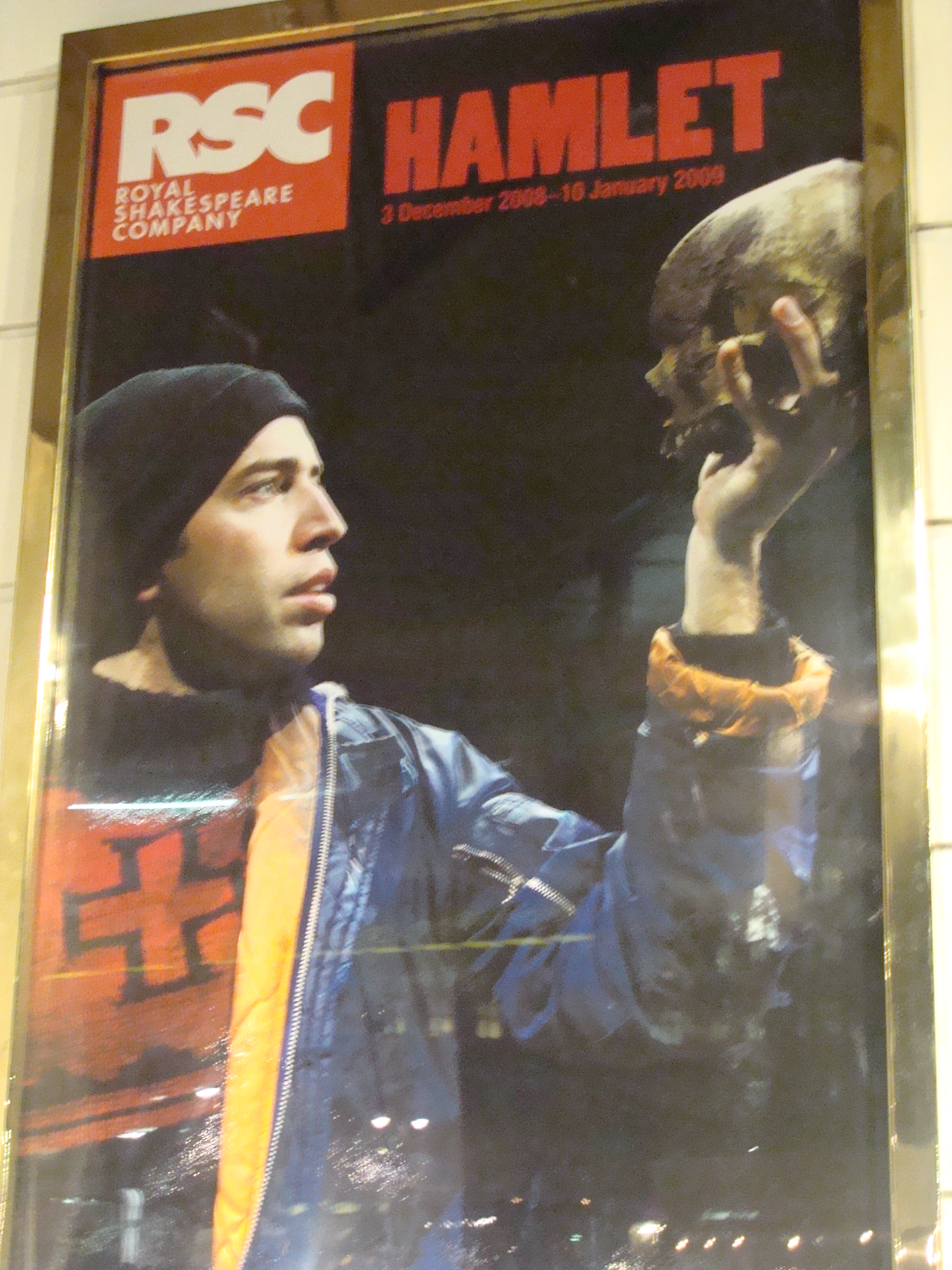
DSC01426


Edward Bennett as Hamlet

In Hamlet, the RSC have, by far, their best production of the year. Last night at the Novello Theatre, an enthusiastic audience rose to their feet in standing ovation to reward the actors on the conclusion of an oustanding performance.

Continue reading →

Wherefore art thou, Romeo?

On Friday, I was in Stratford-Upon-Avon, once more, for the Royal Shakespeare company’s latest production of Romeo and Juliet. It has been an interesting year for the RSC with receipts up because of David Tennant’s involvement in Hamlet and Love’s Labour’s lost but some mixed reviews and varying quality and conceptualisation of productions.

Continue reading →

Bang the drum…. slowly

Harold Pinter does strange things with words.
It’s not just the obligatory Pinteresque pause that everyone mentions. He takes them from their normal surroundings and imbues them with a sense of tension which, in his best work, is never resolved. It simply hangs.

A few days ago, I caught the production of his “The Birthday Party” at the Lyric theatre, Hammersmith, London (just down the road from the place I live, which is handy). 
I first read the The Birthday Party a long time ago. This was in the early 1980s. I’d started reading Beckett and Brecht and then I stumbled on Pinter. In the town I grew up in, you didn’t get productions of Pinter, Beckett or ANYTHING. It was like living in a cultural vacuum. So if you were young and precocious, you read play scripts and tried to visualise what it would be like. I visualise better than most. I learned earlier. It was about putting a little colour into life – you get so sick of black and white.

So I read everything that Pinter had written that I could lay my hands on. The Homecoming, The Birthday Party, The Caretaker, The Dumb Waiter, Betrayal, A Kind of Alaska (maybe that was later, it seems that way), Old Times, No Man’s Land were some of the plays I remember reading back then and always in his best plays it was the tension and the transitions that he captured that got me and kept me reading. There was also a screenplay for “A la recherche du temps perdu” by Proust which I loved and admired greatly.

There are many writers whose best work is in the past and, for myself, I regard Pinter in that way. I can’t admire his politics and his recent public pronouncements just simply needed a certain degree of proportion and that is what a writer should have. I think Pinter has lost some of that measure that he had when he was a younger man.

So it was good to see one of his old plays. “The Birthday Party” is, if anything, perhaps a little too early. He is still learning the craft that fired that tension that interested me, at this point. The third act largely exorcises that malevolence that he has spent two acts creating. It resolves some of the issues and if Pinter has a strength it is that he taught the theatre that things don’t have to be resolved.

In The Birthday Party, Meg and Petey, a married couple, live with their guest, Stanley Webber. Nothing much changes in their lives. Lulu, apparently a neighbour, flirts with Stanley but nothing much goes on beyond the routine of daily meals, newspapers, a time for bed and a time to rise. All this changes when Meg is told that two visitors are coming. It is then that all of life’s possibilities break out and things begin to fall apart.

The words are clever and even some times funny. It is the characters’ response to simple words and simple encounters that places them on the rack and stretches them and allows their potentialities to burst open. 

Stanley (advancing): They are coming today.
Meg: Who?
Stanley: They are coming in a van.
Meg: Who?
Stanley: And do you know what they’ve got in that van?
Meg: What?
Stanley: They’ve got a wheelbarrow in that van.
Meg (breathlessly): They haven’t.
Stanley: Oh yes, they have.
Meg: You’re a liar

“The Birthday Party” teaches us that those who are fully awake are changed by encounters. Those who prefer not to change (like Petey in the play) can remain that way but only by sleepwalking through life’s experiences.

The play is loaded with possibilities. The fact that McCann and Goldberg (two visitors at what is apparently <perhaps> a coastal boarding house are Irish and Jewish respectively loads their mission <should it exist> with all manner of possibilities –  religious, political, cultural. All we know is that this is the twentieth century and their purpose, should they have one, could be sinister. We’re not sure how much of what happens is real or if any of it is dream. The import is not in the action but in the words – what is said and what is not said and how the characters and the audience react to what they hear and what they are not told.

The current production is at a close now. For the record, Nicholas Woodeson and Lloyd Hutchinson as McCann and Goldberg were excellent with the right air of purpose but with so much hidden. Sian Brooke as Lulu had just a little too much class and was a little too pretty (if you’re going to come up short, it’s not a bad way to do it). Sheila Hancock as Meg was a little too aware of herself and the play and her costume in the first act was just a little too stereotyped. She played for laughs sometimes that the play did not need.

Meg’s character is potentially the most mysterious of all in a strange way, if handled well. On the face of it she is almost moronic and easily satisfied. Simple. But she has many layers. She wants to be sexually alluring to the guests (even Stanley). She wants social standing – her dwelling is “on the list” she insists, her guests found her to be the belle of the ball. She wants to mother Stanley. His birthday present from her is a child’s drum. She is made more distraught by its brokenness than by anything else. Petey assures it that it can be easily replaced but then he also assures her that Stanley is still upstairs at the conclusion of the play. Is he or is Stanley broken too? She wants the danger but not the threat of change but most of all she wants things just to stay the same.

It is a thought-provoking play. I’m glad to be still thinking about it.


A New Kind of Album

The new John Foxx album arrived today. It’s a live album recorded on his “Metamatic” tour last Autumn. Entitled “A New Kind of Man”, it can only be obtained direct from Townsend Records ( www.townsend-records.co.uk ) under an exclusive deal that Foxx has with this outlet. As I understand it the release is limited to 1000 copies at the present time so will probably prove difficult to find in the long term.

The album carries 17 tracks which were recorded across the tour and selected by John and his musical partner Louis Gordon. Consequently, it has performances of the 10 tracks which originally made up the “Metamatic” album in 1980 and 7 recordings of additional tracks which were from the same era. These are the instrumentals: “Film One” (B-side of Underpass); “Glimmer” (which was covered by cult electronic band, Sonic Dude for a single release in 1982); “Mr. No” (also covered by Sonic Dude and then the Foxx version was remixed for a DJ single a couple of years ago); and the vocal tracks: “This City” (part of the No-One Driving single package originally); “Burning Car” (a hit, of sorts, in its own right); “21st Century” (b-side of that hit then called “Twentieth Century”) and, finally, “My Face” which those of us of a certain age will remember was originally released on a yellow flexi-disc attached to the cover of Smash Hits.

Anyway, the tour was essential viewing and listening for those who like the in-vogue tours which revive a classic album in its entirety and the album is a great reminder of that and should be picked up by those who were there and those who were not.

Bob Dylan – The Curse of Celebrity and the Cross of Christ

(This was the original title. When it was published elsewhere, my editor chose to retitle the piece “Bob Dylan: The Spiritual Journey of a 20th Century Icon” which was not what I wanted AND rather seemed to miss my point)

When Leon Patillo was converted in the late seventies, the Christian music industry and its press was full of the news of the conversion of “Santana’s lead singer”. Those who are familiar with the music of Santana will know that the band revolves around and is named for its guitarist and has used a mammoth amount of vocalists over the last 30 years. But the facts don’t always get in the way of Christian reporting and a good story when it sees one.

Patillo may now only merit a footnote in the history of Contemporary Christian music but his launch into the Christian marketplace and its subculture was indicative of something that was going to happen time and time again in the late 70s and early 80s. The church had come to believe that celebrity converts in some ways added to the validity of the gospel. Perhaps if it waved the flag hard enough and high enough and showed that someone famous believed then those who didn’t would be persuaded by celebrity testimony.

Perhaps it was symptomatic of the times. It was the opening of an era in church life which was heavily influenced by the Vineyard fellowship, John Wimber and his teachings. The argument went something like this – if people see marvellous works of God then they would be persuaded of the validity of the gospel and accept Christ. Leaving aside troubling comments of Christ that suggested it was an adulterous generation that looked for a sign and that people would not be persuaded even if someone was raised from the dead, whatever the weaknesses of the theology and the theory of the church, the Vineyard movement would make a lasting impression on the church for the next two decades, until the passing of Wimber, its most persuasive advocate.

Which brings us to Bob Dylan. Not only was Dylan the height of the cult of the celebrity convert, his conversion occurred whilst he was under the auspices of the Vineyard movement. After his conversion, Dylan immediately began to record exclusively gospel songs and began to perform in concert in a way that was out of keeping with the first twenty years of his career. Someone who previously had needed to be encouraged to say “Thank You” between songs and who evaded questions presented by the press, now began to preach sermons about Armageddon and give interviews about his new found faith. Sometimes he was booed and heckled whilst on stage whilst others talked about it all being “a phase”. In 1982, he reverted to type refusing to talk about much of anything once more. He left Vineyard, began to study Scripture, occasionally with the Jewish Lubavitch sect, and declined to host a gospel music awards show. The church that had a use for Dylan’s celebrity now had no use for him. His 1983 album “Infidels” was searched by the Christian press for the expected disowning of the Christian faith and when none came the religious press paid less and less attention to each subsequent Dylan album. The Dylan Christian era was over, it seemed.

Continue reading →